3.5x ROAS and ₩510M Monthly Revenue for Circuitronix
- Blended ROAS
- 3.5x
- from 1.7x
- Monthly Revenue
- ₩510M
- from ₩200M
- Cost Per Unit Sold
- ₩66,300
- from ₩99,000
- Accessory Attach Rate (60-Day)
- 21%
- from 9%
Overview
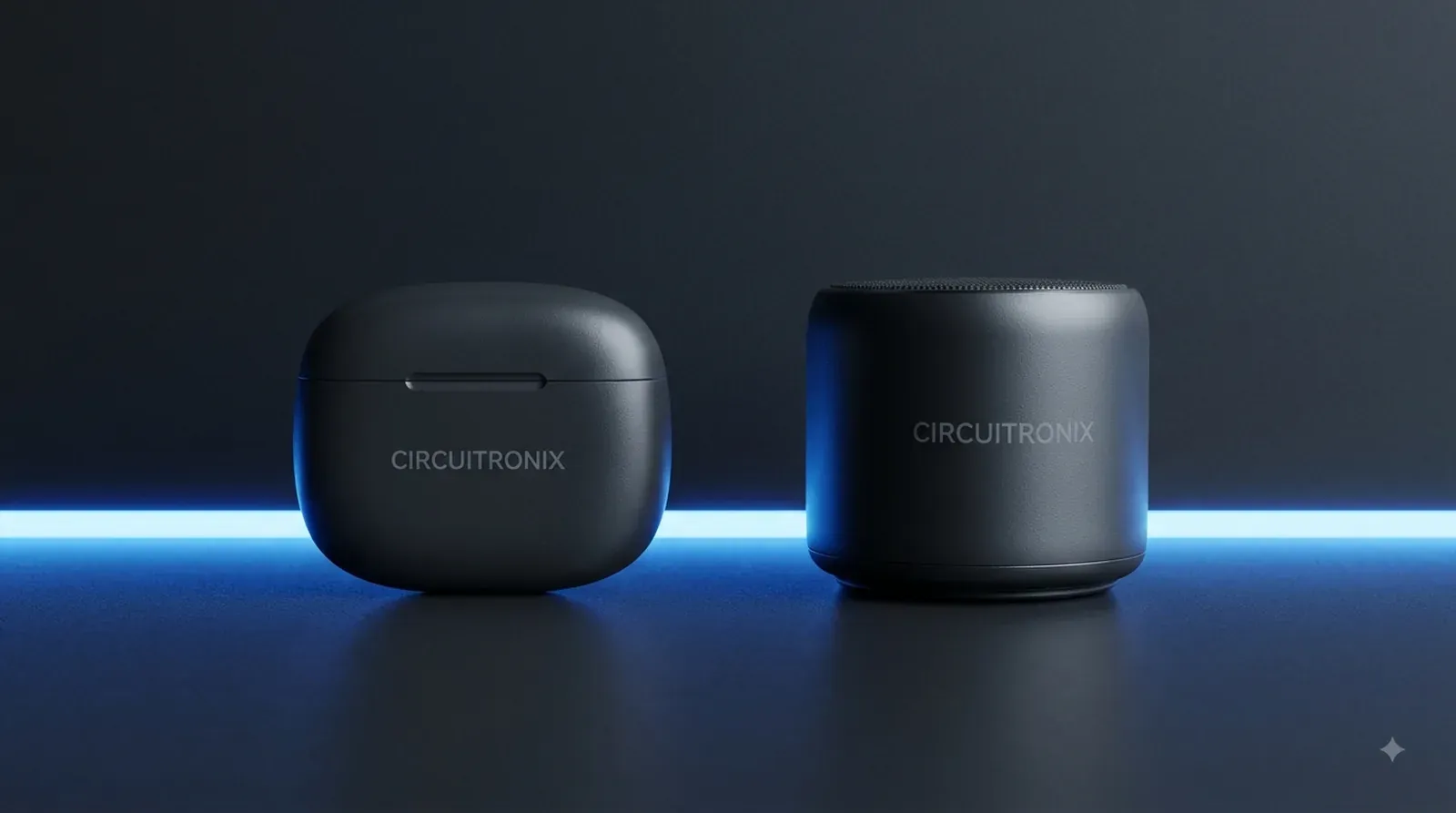
Circuitronix is a direct-to-consumer consumer electronics and gadgets brand based in Seoul, selling audio devices, smart accessories, chargers, and power banks exclusively through Shopify at a ₩198,000 average order value. We started working with Circuitronix in November 2024, when monthly revenue sat around ₩200,000,000 on ₩150,000,000 of average monthly ad spend, blended ROAS at 1.7x, and cost per unit sold at ₩99,000. Today, monthly revenue has grown to ₩510,000,000, blended ROAS sits at 3.5x, cost per unit sold is down to ₩66,300, and the 60-day accessory attach rate has more than doubled, from 9% to 21%.
A differentiation problem, not a demand problem
The problem wasn’t demand. Every audience wants a better pair of earbuds or a better power bank. Going into November 2024, the issue was differentiation: a weak, incomplete product feed and generic messaging meant nothing in this catalog looked different from a hundred other tech accounts running the same kind of ads.
We treated this as a differentiation problem first, not a raw demand problem, and built the account around actually saying why any given product in this catalog was worth choosing.
Five phases, one primary turning point
Like the Provenance Foods account, this one is organized as a dated timeline rather than a channel-by-channel list.
Phase 1: Structural Rebuild
We completely rebuilt the Google Shopping feed — detailed product-level bidding, richer titles, accurate attributes — because a generic, incomplete feed was the root cause of the account’s poor differentiation. Meta began testing feature-focused short video, and new product pages launched with comparison points and real lifestyle context instead of spec sheets alone.
Phase 2: New feed and creative show first lift
With the new feed and creative live, blended ROAS rose from 1.7x to 2.5x and monthly revenue reached ₩265,000,000. Cost per unit sold started declining for the first time since we’d taken over the account.
February 2025 — the month everything compounded at once
This is the account’s single most important dated fact — the source material itself calls it the clearest inflection month. Feature-focused video creative and tighter lookalike audiences matured at the same time as the improved Shopping feed, and revenue jumped into the ₩310,000,000–₩330,000,000 range while blended ROAS crossed 3.1x on a sustained basis, not a one-month spike. From this point forward, growth became compounding rather than linear — a real structural change in the shape of the growth curve, not just a bigger number.
Phase 4: Hero products and accessory attach both climb
Hero products gained stronger revenue share and accessory attach rates improved alongside them. Google Shopping efficiency continued to rise, and monthly revenue stabilized above ₩360,000,000.
Phase 5: Steady at 3.4x–3.7x
The system settled into steady high efficiency, with blended ROAS consistently in the 3.4x–3.7x range and strong repeat behavior underneath it.
What didn't work
Discount tech buyers don’t come back for the ecosystem
Not everything we tried worked, and the two corrections here weren’t the same kind of fix.
“Tech deals / big discount” creative — fully discontinued
We ran a generic “tech deals / big discount” creative angle. It attracted volume, but the buyers it brought in were low-intent and rarely came back, so we fully discontinued it in January 2025.
Broad tech-interest targeting — narrowed, not paused
Broad tech-interest targeting was delivering inefficient traffic, so we narrowed it — not a full cut, but a tighter focus on higher-intent lookalike and in-market segments.
- Blended ROAS
- 3.5x
- from 1.7x
- Monthly Revenue
- ₩510M
- from ₩200M
Two mature-ROAS figures, kept distinct
Two mature-ROAS figures show up in this account, and they’re not the same number. The account’s overall mature-state blended ROAS runs 3.4x to 3.7x, comfortably matching the 3.5x we headline throughout. Separately, feature-focused short video campaigns on Meta specifically deliver 3.8x to 4.6x ROAS in mature periods — a platform-specific figure, higher than the blended account average, cited once, here, clearly labeled as Meta’s number rather than the account’s.
Cost per unit sold fell from ₩99,000 to ₩66,300, a 33% reduction. Site-wide conversion rate rose from 1.6% to 2.7%, up 69%. Google Shopping’s own revenue share rose from 34% to 51%, the cleanest single piece of evidence that the Phase 1 feed rebuild actually worked. Repeat purchase rate rose from 12% to 23% — solid, and just under double, not quite the “more than doubled” territory we’re reserving for the attach rate above.
We don’t think all of this came from the media program alone. South Korea is one of the most competitive consumer electronics markets in the world, with strong domestic players and fast product cycles, and some of this account’s efficiency gains sit against that broader competitive and seasonal gifting backdrop — graduation season, year-end gifting — not solely the media program.
From a feature-focused ad to a second purchase
The path a Circuitronix customer takes today is built to end in a cross-sell, not just a single sale.
How much of the account Google Shopping now carries
What changed when the feed told the truth
Four workstreams ran across the engagement, summarized here and detailed in the table below.
| Channel / Workstream | What We Did | Why It Mattered |
|---|---|---|
| Google Shopping | Complete feed rebuild: attributes, titles, product-level bidding. | Fixed the root cause of the account's poor differentiation — revenue share rose from 34% to 51%. |
| Meta Ads | Feature-focused short video creative and tighter lookalike audiences. | Mature campaigns delivered 3.8x–4.6x ROAS, well above the blended account average. |
| CRO | Comparison-driven product pages with lifestyle context. | Gave buyers a real reason to choose a specific product over a hundred similar listings. |
| Lifecycle Email | Post-purchase accessory and usage-tip email sequences. | Drove the 60-day accessory attach rate from 9% to 21%. |
Circuitronix against a typical consumer electronics DTC account
| Metric | Typical Consumer Electronics DTC Account | Circuitronix (Actual, KRW) |
|---|---|---|
| Blended ROAS | Electronics and gadgets typically run 2x–4x blended, per based.marketing's 2026 ecommerce ROAS benchmark report. 1 | 3.5x, up from 1.7x |
| Repeat Purchase Rate | Electronics runs 12%–25% repeat purchase rate, per Prooflytics' 2026 repeat purchase rate benchmark report — the closest published analog to attach rate, though not the same metric. 2 | 23% repeat purchase rate; 21% 60-day accessory attach rate, up from 9% |
₩510 million a month, and buyers who trust the ecosystem
Blended ROAS moved from 1.7x to 3.5x. Monthly revenue grew from ₩200,000,000 to ₩510,000,000, up 155%. Cost per unit sold fell from ₩99,000 to ₩66,300. The 60-day accessory attach rate more than doubled, from 9% to 21%. None of this happened in a straight line, and we don’t think it happened from the media program in isolation.
Customer mix
Before
34%
Google Shopping
After
51%
Google Shopping
Google Shopping moved from 34% to 51% of the total, with Other channels making up the remainder — a gain of 17 points.
From the outside, we looked exactly like every other tech account competing for the same audience.
Your budget deserves better.
More results
Other engagements.

3.9x
Blended ROAS
from 1.6x
3.9x ROAS and $265k in Monthly Revenue for a Los Angeles Apparel Brand
We took Vespera Apparel from a single undifferentiated Meta campaign and a 14% repeat purchase rate to a segmented account and real retention infrastructure — nearly tripling blended ROAS along the way.

6.4x
Blended ROAS
from 1.8x
6.4x ROAS and $4.8M in Revenue for Luminara Jewelry
We took Luminara from a fatigued, single-tier Meta account and an unoptimized Google feed to a trust-and-consideration funnel built for a $480 purchase — and generated $4.8M in revenue along the way.

3.8x
Blended ROAS
from 1.7x
214% Revenue Growth and 37% Lower Cost Per Purchase for an Austin Skincare Brand
We took Velora Beauty from a hero-product-only account with fatigued creative to a routine-building brand — and nearly doubled repeat purchase rate in the process.